Seattle Landlord Can Sue City Over ‘Toxic Cocktail’ of Renter Protections, Court Rules
A Washington appeals court revived a $39 million affordable-housing owner's claim that Seattle's rental ordinances amounted to an unconstitutional taking. The case could echo in Philadelphia and other Democratic-led cities.
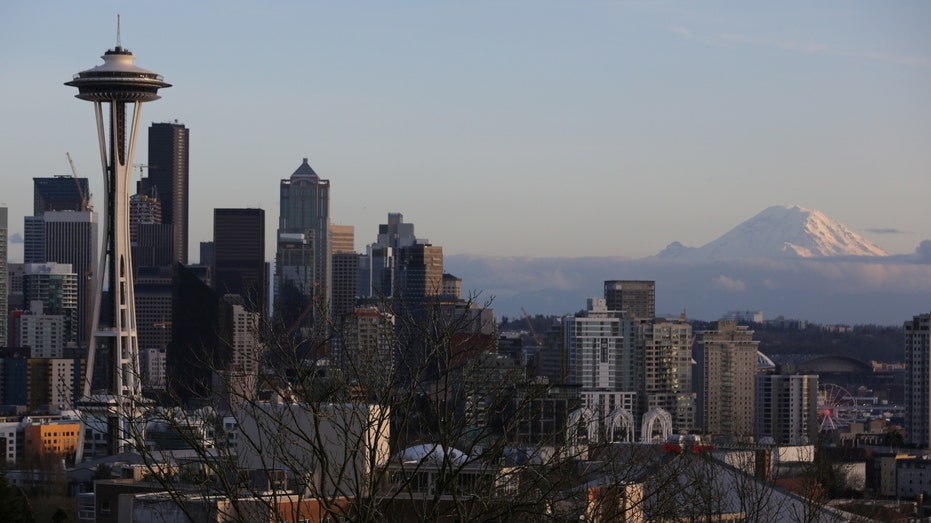
SEATTLE — A Washington state appeals court has revived a lawsuit by the owner of a 254-unit affordable housing complex that claims Seattle’s renter-protection ordinances amounted to an unconstitutional taking of private property, giving a boost to landlord groups challenging similar policies in other Democratic-led cities.
The Washington Court of Appeals ruled Monday that GRE Downtowner LLC, owner of the Addison on Fourth development, can proceed with claims that the city’s successive rental regulations — including a rule requiring landlords to accept certain additional occupants without consent — destroyed the financial viability of a $39 million investment funded through federal Low-Income Housing Tax Credits.
According to court filings described by Fox News Digital, the property generated positive cash flow from 2015 through 2018, before a series of city ordinances restricting criminal-background checks, expanding tenants’ rights to bring in additional occupants, limiting certain evictions and requiring relocation assistance after qualifying rent increases. GRE says rent collections fell from 93.9% in 2018 to 44.1% in 2023, producing nearly $5.8 million in cumulative operating losses. A federal judge appointed a receiver in January 2026 after the property defaulted on its mortgage.
The Seattle City Attorney’s Office said it is reviewing the ruling and has not decided whether to appeal. “We haven’t made a decision on an appeal yet,” Chief of Staff Dan Nolte said in an email Thursday, per Fox News Digital.
What the Ruling Actually Decides
The appellate decision does not award damages or strike down Seattle’s ordinances. It allows GRE’s inverse-condemnation claim — the legal theory that government regulation went so far as to effectively take property without just compensation — to move forward. That distinction matters: the court has decided the claim is legally viable, not that the city is liable.
Sean Flynn, executive director of the Rental Housing Association of Washington, which is working with GRE, told Fox News Digital that the city’s ordinances created a “toxic cocktail of legislation” that took a functioning affordable property and “destroyed it.” He argued the ruling affirms that “if your regulations amount to the point of which you take my real property, I’m allowed to sue you for it.”
The Numbers Behind the Story
The Addison on Fourth was built under the federal Low-Income Housing Tax Credit program, which trades rent restrictions for tax incentives to draw private capital into affordable housing. Flynn said such projects typically produce modest profits, with the tax credits doing the work of attracting investors. A drop in rent collection from roughly 94 cents on the dollar to 44 cents over five years is the kind of swing that can wipe out the thin margins those deals depend on — and the $5.8 million in operating losses GRE cites is roughly 15% of the project’s headline $39 million value.
Ilya Somin, a George Mason University law professor specializing in property rights, told Fox News Digital the ruling is “only moderately significant, but it’s more significant than just a routine legal decision that only affects the people immediately involved.” He said courts in other states could weigh the Washington ruling in similar challenges, and that the case could theoretically reach the U.S. Supreme Court — though he called that unlikely.
Somin pointed to the Supreme Court’s 6-3 decision in Cedar Point Nursery v. Hassid, which held that a California rule allowing union organizers onto agricultural property was a physical taking under the Fifth Amendment. He said Seattle’s roommate provision raises a comparable question because it requires landlords to house occupants they never screened or contracted with. “I believe the plaintiffs in this case deserve to win at least on that roommate provision,” he said.
Who Wins and Who Loses
The immediate winners are GRE and landlord advocacy groups, who now get discovery and a forum to argue that the cumulative cost of renter protections can cross a constitutional line. The immediate losers are tenants at Addison on Fourth, now under receivership, and the city, which faces potential compensation exposure if the claim succeeds.
The broader stakes sit with renters in cities that have adopted similar rules. Flynn argues that tighter restrictions drive out investment. “When you take the investment incentive out of providing a product, you get worse products at a higher cost,” he told Fox News Digital, adding that in Seattle, “once upon a time… you could see crane after crane after crane building housing. They’re gone, and they’re not coming back.” Tenant advocates counter that such rules are necessary to keep low-income residents housed — a position the city has not yet formally argued in this appeal.
Why Other Cities Are Watching
Seattle is not alone. San Francisco has long enforced rent controls and eviction limits. New York City expanded eviction protections in 2024 under the state’s Good Cause Eviction law. Portland limits landlords’ use of criminal histories and requires relocation payments after certain rent increases of 10% or more. Philadelphia has adopted criminal-history screening restrictions.
None of those cities is bound by a Washington state appellate ruling. But property-rights lawyers in those jurisdictions can now cite a reasoned opinion holding that a cumulative package of renter protections can support a takings claim — which is precisely the kind of precedent that can shape settlement calculations and legislative drafting. Expect landlord groups to test the theory, and city attorneys to argue the ruling is limited to its facts.
What happens next: Seattle must decide whether to seek review by the Washington Supreme Court; GRE’s case returns to the trial court; and the receiver continues to operate Addison on Fourth in the meantime.
- Explains that the appellate ruling revives a claim but does not establish liability or award damages
- Calculates the $5.8M operating loss as roughly 15% of the $39M project value
- Translates the rent-collection drop into cents-on-the-dollar terms for readers
- Clarifies that no other city is legally bound by a Washington state appellate ruling, while noting its persuasive value
- Flags the next procedural steps: possible state supreme court review, return to trial court, continuing receivership