Four States Vote on Girls’ Sports Ballot Measures
Arizona, Nebraska, Washington and Colorado vote Tuesday on measures that would restrict who can compete in girls' and women's school sports. Here is what each one does and who is affected.
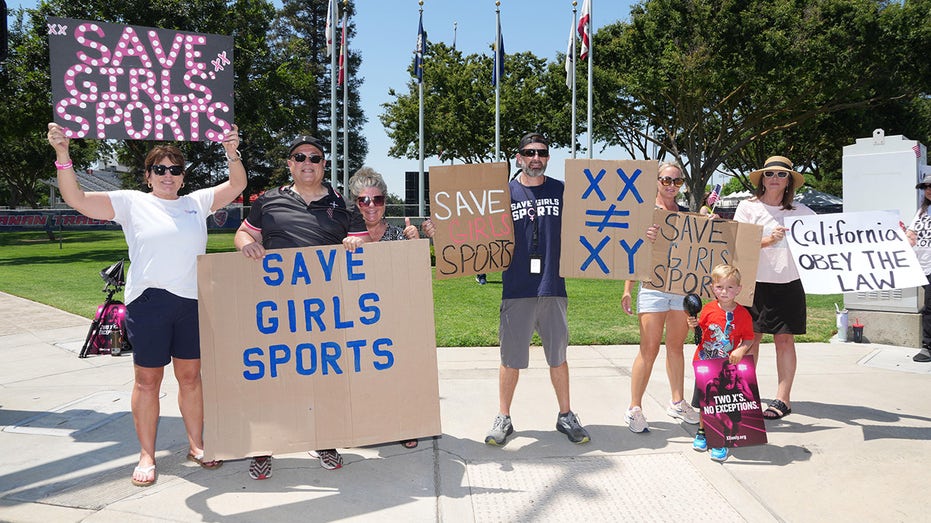
Voters in four states — Arizona, Nebraska, Washington and Colorado — decide Tuesday on ballot measures that would restrict participation in girls’ and women’s school sports to students defined as biologically female. Two of the states already have such laws and are voting on expansions; the other two have no statewide restriction and would create one. The outcomes would affect K-12 and, in some cases, college athletes, school eligibility rules, and access to locker rooms and restrooms tied to athletics.
What happened
The four measures differ in scope, according to the source report. Arizona and Nebraska already restrict biological males from female sports, so a “yes” vote there extends existing policy rather than starting from scratch. Washington and Colorado currently leave eligibility to schools, districts and athletic associations; passing either measure would mark a notable shift in two traditionally Democratic states.
Washington, Initiative 638. A yes vote would bar students defined as biologically male from girls’ K-12 interscholastic sports. Girls would need documentation from a healthcare professional confirming biological sex based on reproductive anatomy, genetic makeup or normal endogenously produced testosterone levels. Current rules allow K-12 athletes to compete based on gender identity; the report cites a case in Camas, Washington, where a boy switched to the girls’ team mid-season this year.
Colorado, Proposition 134. A yes vote would set statewide sex-based participation rules from K-12 through college, covering public, charter and private schools and colleges, plus interscholastic, intramural and school-sponsored club sports. Exceptions exist for coed sports and for girls joining boys’ teams where no equivalent girls’ team exists. The measure defines females and males by the reproductive system’s role in producing ova or sperm. Unlike Washington’s, it requires no doctor’s note; schools would write their own eligibility policies, and the state education commissioner could act against districts that intentionally refuse to comply.
Arizona, Proposition 318. A yes vote would extend existing public school rules to private schools and athletic associations, including those overseeing youth and college sports. It would also require restricting access to restrooms, locker rooms and other athletics-related private spaces based on biological sex as recorded on an original birth certificate, and would let athletes sue schools and associations that knowingly violate the law.
Nebraska, Initiative 442. A yes vote would amend the state constitution to bar biological males from girls’ and women’s school sports from K-12 through college, requiring teams to be designated male, female or coed. Nebraska already has a law — the Stand With Women Act, signed by Gov. Jim Pillen in June 2025 — but the amendment would make the restriction harder for future lawmakers to undo.
Why it matters
The practical effect depends on which measures pass. In Washington and Colorado, approval would end a system where local bodies set eligibility, likely producing legal challenges; opponents including No Hate in Washington State, Planned Parenthood and the ACLU argue the measures discriminate against transgender students and could lead to invasive sex verification. Supporters, including the Fairness for Girls campaign and XX-XY Athletics founder Jennifer Sey, say the rules protect fairness, privacy and safety, and that 27 states already have similar restrictions without the examinations critics describe. Nebraska’s measure carries extra weight because constitutional language is harder to reverse than a statute.
Key facts at a glance
| State | Measure | Scope | Current status |
|---|---|---|---|
| Arizona | Proposition 318 | Private schools, athletic associations, locker rooms/restrooms, lawsuits | Existing public school law |
| Nebraska | Initiative 442 | K-12 through college, constitutional amendment | Stand With Women Act (June 2025) |
| Washington | Initiative 638 | Girls’ K-12 sports, documentation required | Gender identity eligibility |
| Colorado | Proposition 134 | K-12 through college, public/charter/private | Local eligibility policies |
Prediction markets cited in the report put Arizona at 82%, Washington at 64% and Colorado at 55%; no Nebraska market was found.
What this means for you
- If you have a student athlete in any of these states, check with your school or athletic association after the results — eligibility paperwork and team designations could change, especially in Washington, where documentation would be required.
- In Arizona, the measure reaches private schools and youth and college associations, so families outside the public system may be affected.
- In Nebraska, a yes vote would not change current practice immediately; the existing law already applies.
- Nothing is final until votes are counted and any legal challenges are resolved.
Frequently asked questions
What would a yes vote in Washington require of athletes?
Documentation from a healthcare professional verifying biological sex, based on reproductive anatomy, genetic makeup or normal endogenously produced testosterone levels.
Does Colorado’s measure require a medical exam?
No. It specifies no verification method; schools would set their own eligibility policies.
Why is Nebraska voting if it already has a law?
The initiative would place the restriction in the state constitution, making it harder for future lawmakers to overturn.
What happens if a measure fails?
Current rules stay in place — existing laws in Arizona and Nebraska, and local eligibility policies in Washington and Colorado.
What to watch next
Results from all four states, and whether opponents challenge any passing measure in court. The report does not say when results are expected or what legal steps opponents have planned.
- Arizona, Nebraska, Washington and Colorado vote Tuesday on restricting girls' and women's school sports to biological females.
- Arizona and Nebraska already have laws; their measures expand or entrench them, with Nebraska's going into the constitution.
- Washington and Colorado currently have no statewide restriction; passing would be a major shift in two Democratic states.