Israel Government Talks Begin as Netanyahu’s Bloc Falls Short
Israel's president starts consultations with party leaders after final results left Benjamin Netanyahu's bloc at 53 seats, short of the 61 needed to govern.
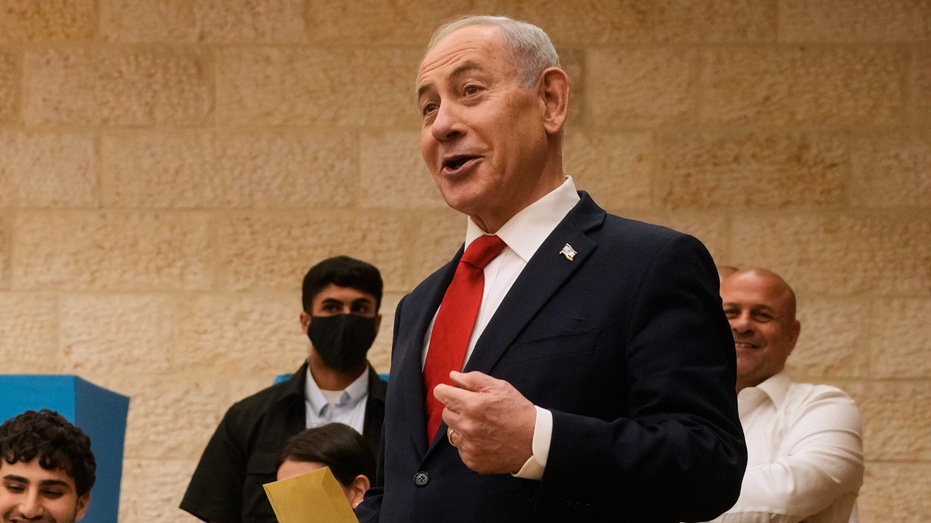
Israel’s president began meeting party leaders to decide who should try to form the next government, after final election results left Prime Minister Benjamin Netanyahu’s bloc with 53 of the Knesset’s 120 seats — eight short of the 61 needed for a majority. The opposition alliance led by Gadi Eisenkot holds 48 seats, and two predominantly Arab parties with 19 seats between them may end up deciding who gets the first chance to govern.
What happened
Israel’s Central Elections Committee published the final count last Friday. President Isaac Herzog then opened consultations with every party elected to the 26th Knesset, in ascending order of size: Religious Zionism-Zehut and Shas (six seats each) first, then Yisrael Beiteinu (seven), United Torah Judaism and Otzma Yehudit (seven each), The Democrats and Ra’am (eight each), the Joint List (11), BeYachad (12), Yashar (21) and Likud (27).
Religious Zionism-Zehut, Otzma Yehudit and Shas have each confirmed they will recommend Netanyahu to Herzog, according to Fox News Digital, which reported the consultations and interviewed the analysts cited here.
The two Arab parties drew Netanyahu’s public criticism. In a post on X on Monday, he said the public does not want a government dependent on Ra’am and the Joint List, which he described as supporting terrorism and rejecting the existence of a Jewish state. He added that he is open to talks on a broad government with any party that does not support terrorism.
A Joint List source told Fox News Digital the party is likely to recommend Eisenkot as the first lawmaker tasked with forming a government. With both Arab parties behind him, Eisenkot would have recommendations from parties holding more than 61 seats.
Why it matters
The arithmetic, not the campaign, now decides the outcome. Herzog is formally free to choose whom to task, but commentator Amir Oren told Fox News Digital the president would be inclined to pick the candidate backed by a majority of Knesset seats — which, on those numbers, points to Eisenkot.
That does not settle it. The lawmaker given the mandate has 28 days to form a government, with the president able to add up to 14 more. Analysts quoted by Fox News Digital expect the first attempt to fail. BeYachad leader Naftali Bennett and Yisrael Beiteinu chief Avigdor Liberman are seen as unlikely to serve in a government reliant on the Joint List, given its pro-Palestinian positions and opposition to Zionism.
One route out is a minority government supported from outside by the Arab parties. Israel has no precedent for that immediately after an election, though it has happened mid-term: during Netanyahu’s current term, an ultra-Orthodox party left the coalition over a military conscription dispute but kept backing the government from outside.
If both mandated candidates fail, a 21-day window opens in which any Knesset member can try to assemble a 61-seat majority. Former Knesset member Dov Lipman told Fox News Digital that Eisenkot might then agree to serve under Netanyahu for two years to avoid another election.
Key facts at a glance
| Item | Detail |
|---|---|
| Knesset size | 120 seats; 61 needed for a majority |
| Netanyahu’s bloc | 53 seats |
| Eisenkot-led opposition | 48 seats |
| Arab parties | Joint List 11, Ra’am 8 — 19 combined |
| Largest party | Likud, 27 seats |
| Mandate to form government | 28 days, extendable by up to 14 |
| New Knesset sworn in | Nov. 10 |
What this means for you
- Expect weeks, not days. The 28-day mandate plus a possible 14-day extension means the shape of the government will likely stay unclear well into the coming weeks.
- Watch the Arab parties’ recommendation. Their 19 seats are the clearest signal of who gets the first mandate.
- Government business continues. The current prime minister and ministers stay in office and keep carrying out their duties under the new parliament’s oversight, so there is no immediate vacuum.
- Another election is possible but not automatic. The 21-day open window exists specifically to avoid one.
Frequently asked questions
How many seats does a party need to form a government in Israel?
Sixty-one of the Knesset’s 120 seats. No bloc reached that in the final count.
Who decides who tries to form the government?
The president tasks a lawmaker with the mandate. Herzog is formally free to choose, but analysts expect him to follow the candidate with majority backing among parties.
What happens if the first candidate fails?
The mandate can pass to another lawmaker. If that also fails, a 21-day period follows in which any Knesset member can attempt to build a 61-seat majority.
When does the new Knesset take office?
It is scheduled to be sworn in on Nov. 10, after which members begin forming committees and advancing legislation.
What to watch next
Whether the Joint List and Ra’am both recommend Eisenkot, and whether Bennett and Liberman hold to their refusal to sit with the Arab parties. Analysts also flag the caretaker government’s room to launch military operations as a constraint, and Prof. Gideon Rahat of the Israel Democracy Institute told Fox News Digital that any unity deal would require freezing the judicial overhaul, agreeing on how to investigate Oct. 7, and settling a mechanism for Netanyahu’s departure.
- Netanyahu's bloc won 53 seats; 61 are needed to govern.
- The two Arab parties hold 19 seats and may decide who gets the first mandate.
- The chosen lawmaker has 28 days, extendable by up to 14, to form a government.